
Learning to work with people means learning to work with complexity
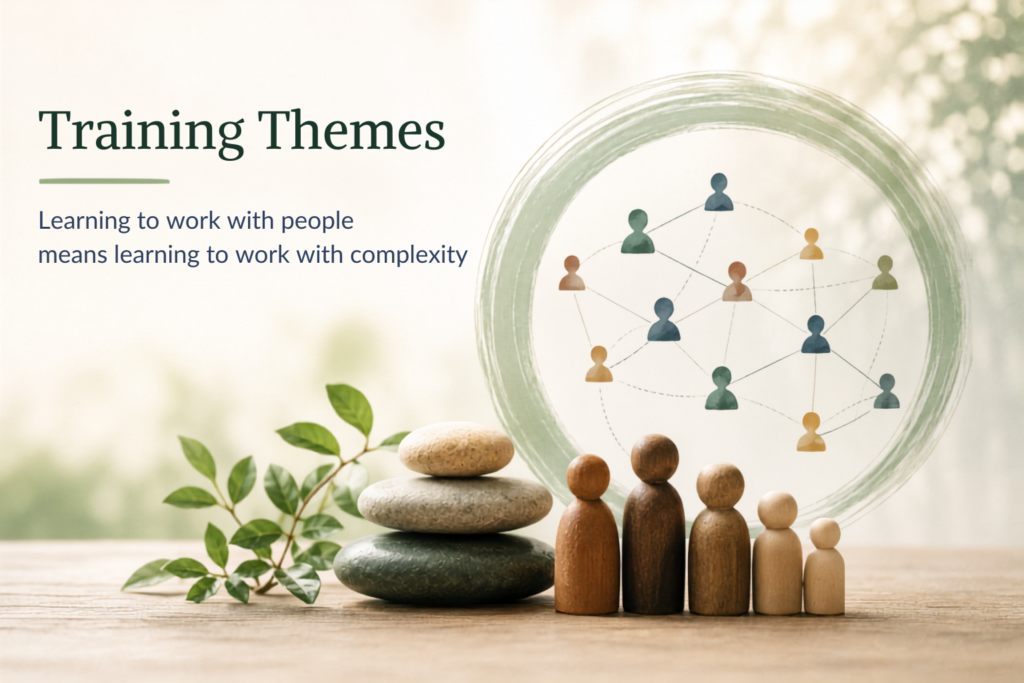
Mindful Representations training brings together mindfulness, systemic understanding, reflective practice, and experiential learning to support both professional development and personal growth.
Some skills involve learning theory. Some involve developing awareness. Some involve discovering that humans are gloriously complicated creatures and that families occasionally seem to have ignored the instruction manual.
Training gradually develops practical competencies together with increased self-awareness, relational understanding, and thoughtful professional presence.
Learning Themes
Developing the capacity to remain present, attentive, and grounded while working with complex emotional and relational processes.
Areas explored include:
- Attention and concentration
- Emotional regulation
- Self-awareness
- Mindful presence
- Mindful transitions
- Reflective practice
- Developing the capacity to observe thoughts, emotions, and experience with increasing clarity
Exploring the wider systems and relationships that influence human experience.
Exploring the wider systems and relationships that influence human experience.
Areas explored include:
- Family systems theory
- Transgenerational patterns
- Interpersonal dynamics
- Group processes
- Social influences
- Historical influences
- Cultural influences
- Understanding how changing historical and cultural conditions shape families, relationships, and experience
Developing an approach that prioritises safety, pacing, and responsiveness to individual differences.
Areas explored include:
- Emotional regulation
- Containment
- Pacing of interventions
- Participant safety
- Recognising differing trauma presentations
- Differentiating isolated trauma, complex trauma, and transgenerational trauma
- Understanding distinctions between directly experienced and inherited trauma influences
- Recognising dissociation and other less obvious trauma responses
Learning to recognise emotional processes within oneself and others while maintaining thoughtful awareness.
Areas explored include:
- Emotional resonance
- Emotional contagion
- Attunement
- Interpersonal influence
- Reflective awareness
- Complex and partial empathy
Developing the capacity to observe experience carefully before rushing to interpretation.
Areas explored include:
- Observing before interpreting
- Tolerating uncertainty
- Reflective restraint
- Embodied awareness
- Descriptive observation
- Recognising strengths and limitations of differing perspectives and frameworks
This helps participants distinguish observation from interpretation and remain open to multiple ways of understanding experience. Scientific, contemplative, phenomenological, and relational perspectives are all explored, with attention given to both their strengths and their limitations.
Developing practical skills involved in supporting individuals and groups.
Areas explored include:
- Mindful interviewing
- Mindful transitions
- Facilitation skills
- Group awareness
- Professional judgement
- Maintaining boundaries
- Supporting movement toward reflection and integration